20 Definitive Reasons On Global Health and Safety Consultants Assessments
Wiki Article
The Total Safety Ecosystem Is About Bridging On-Site Assessments With Digital Innovation
For many decades, health safety management operated in two different realms. There was the physical realm of the workplace - the noise, dust, the rumbling machinery, the tired workers who make split-second decisions. But there was technology-driven spreadsheets, reports and compliance files kept in remote offices. They rarely exchanged information. Assessments on site produced paper that was later converted into digital data however, by the time it was done, the workplace was different, the workforce had left, and the insights were already outdated. The entire safety framework represents the demise of this separation. It's not just about digitizing paper processes but about integrating digital intelligence into the process of physical activities, to ensure that every hammer striking or close miss every safety discussion generates data that improves the next moment's safety. This is the perspective of the ecosystem and it transforms everything.
1. The Ecosystem Includes Everything, Not Just Safety Systems
A real safety ecosystem doesn't be isolated from other business systems. It connects with them. It pulls information from HR systems regarding training completion as well as new hire induction. It links to maintenance schedules to learn about risk profiles for equipment. It works in conjunction with procurement to review the safety and security of suppliers before contract is signed. If on-site inspections are conducted, auditors and consultants can not view only isolated safety information but the entire operational picture. They know what machines are due for maintenance, which teams have had recent turnover and the contractors with poor records elsewhere. This comprehensive view transforms evaluations by transforming snapshots into comprehensive contextual insight.
2. On-Site Assessors become Data Nodes, but not Data Entry Clerks
In traditional models, the on-site assessor's primary job was data collection--observing conditions, interviewing workers, recording findings for later analysis elsewhere. In the complete ecosystem, assessors are data nodes linked to living networks. Their findings feed live dashboards accessible to the operations manager as well as safety committees executive leadership in a single. An issue with inadequate guarding on a pressing brake does not have to wait for a report to be written or circulated immediately; it is listed on the maintenance manager's priority list as well as the plant manager's weekly report. The assessor stays in loop, constantly consulted until the issues are dealt with rather than dismissed when the report is sent.
3. Predictive Analytics shifts the focus on the Future, not just the past
Ecosystems that combine historical assessment data with real-time operational information enable predictions that are impossible to achieve in siloed systems. Machine learning models can identify pattern patterns that are associated with incidents--certain combinations circumstances, specific times of the days, certain crew compositions human observers may miss. If consultants conduct on-site assessments, they arrive equipped with these predictions, knowing when the probability of risk will be the highest and directing their efforts accordingly. Assessments shift from capturing what's occurred before in order to prevent what might happen in the future.
4. Continuous Monitoring replaces periodic checking
The idea of the "annual assessment" becomes obsolete in a whole ecosystem. Sensors, wearables, and connected gadgets provide continuous streams of relevant safety data, including air quality measurement, equipment vibration patterns, location of workers and their movements, noise levels temperature, humidity. On-site assessments by human beings remain vital but their use has changed. instead of checking the conditions at a single moment, assessors are able to interpret patterns within continuous data as they investigate anomalies and verify sensors' readings and understanding the human stories behind the data. The pattern shifts from a regular examination to ongoing engagement.
5. Digital Twins Enable Remote Assessment and planning
Modern ecosystems include digital twins - virtual models of physical workplaces which simulate real-time working conditions. Safety officers can tour workplaces from the comfort of their homes, checking digital representations that display actual equipment condition, recent incidents, repairs, and worker movement. This technology proved to be invaluable during the travel restrictions of pandemics but will continue to be valuable for organizations across the globe. Consultants can conduct preliminary assessment remotely and then be deployed on-site only in situations where physical presence offers the value of their presence. Budgets for travel can be increased and response time decreases, and the knowledge of experts is spread to more sites faster.
6. Worker Voice Integrates Directly into Assessment Data
The biggest difference in traditional assessments of safety has always been the worker perspective. By the time observations reach assessors, they have passed through multiple filters--supervisors, managers, safety committees--that smooth away discomfort and dissent. Comprehensive ecosystems provide direct avenues for input from employees such as mobile applications for reporting concerns in a safe and anonymous manner, hazard reporting that is integrated into assessments workflows as well as investigation of conversations about safety during team meetings. If assessors on site arrive, they already know the words spoken by workers that allows them to validate patterns and investigate further on specific issues rather than beginning with a blank slate.
7. Assessment Findings Auto-Populates Training and Communication
With isolated system, an assessment of safety issues with forklifts could result in a recommendation for retraining. A person is then required to plan for the training, alert the affected employees, monitor performance, and confirm its efficacy. All distinct tasks that require a different efforts. In a full ecosystem, assessment findings create automated workflows. If an assessor discovers a pattern of forklift near-misses the system will automatically identify individuals who have been affected and schedules refresher classes, including safety tips for forklifts in any toolbox talk agenda and then notifies supervisors to boost their attendance. This information doesn't stay in a log; it inspires action in all connected systems.
8. Global Standards Adapt to Local Reality via feedback loops
The safety standards for the world are frequently ineffective due to their centralization and applied locally without adjustment. Complete ecosystems have feedback loops to solve this issue. Since local assessors are using global software frameworks, their findings, adaptations, and workarounds can be passed back to central standard-setters. A pattern is evident. This has always caused problems in tropical climates. as the control measure cannot be used in certain areas, and this terminology confuses workers across multiple locations. Central standards develop based upon the operational information, becoming more robust and more appropriate with each assessment cycle.
9. Verification Becomes Continuous Rather Than Periodic
Regulators, insurers, and corporate auditors have historically relied on periodic verification--inspecting records at fixed intervals to confirm compliance. Complete ecosystems enable continuous verification by granting permission-based, secure access to live data. Individuals authorized to access the data can see an overview of safety status at the moment, as well as recent assessment findings, and corrective action progress without waiting until annual reporting. Transparency increases trust and reduces audit burden as the continuous availability of information eliminates need for many periodic inspections. Organisations demonstrate safety performance through daily operations, rather than periodic events for auditors.
10. The Ecosystem is Expanding Beyond Organizational Boundaries
As they mature, safety systems extend beyond the structure itself, to include contractors, suppliers customers, suppliers, and nearby communities. In the case of on-site assessment, they consider not just the safety of employees, but also the safety of the public, environmental impact, and connection to supply chains. Data shared securely across organisational boundaries enables coordinated risk management--construction sites know when nearby schools have activities that affect traffic patterns, manufacturers know when suppliers have safety issues that might disrupt production, communities know when industrial activities create temporary hazards. The ecosystem becomes truly complete covering all the people affected by the activities of an organisation, instead of only those who are employed by it. View the top health and safety audits for blog recommendations including occupational health and safety jobs, health and safety, safety at work training, safety courses, safety tips, occupational health, fire protection consultant, smart safety, safety at work training, workplace safety tips and recommended health and safety services for site advice including workplace health, safety hazard, safety courses, work safety training, safety at construction site, safety website, occupational health services, safety manager, workplace safety, safety management system and more.
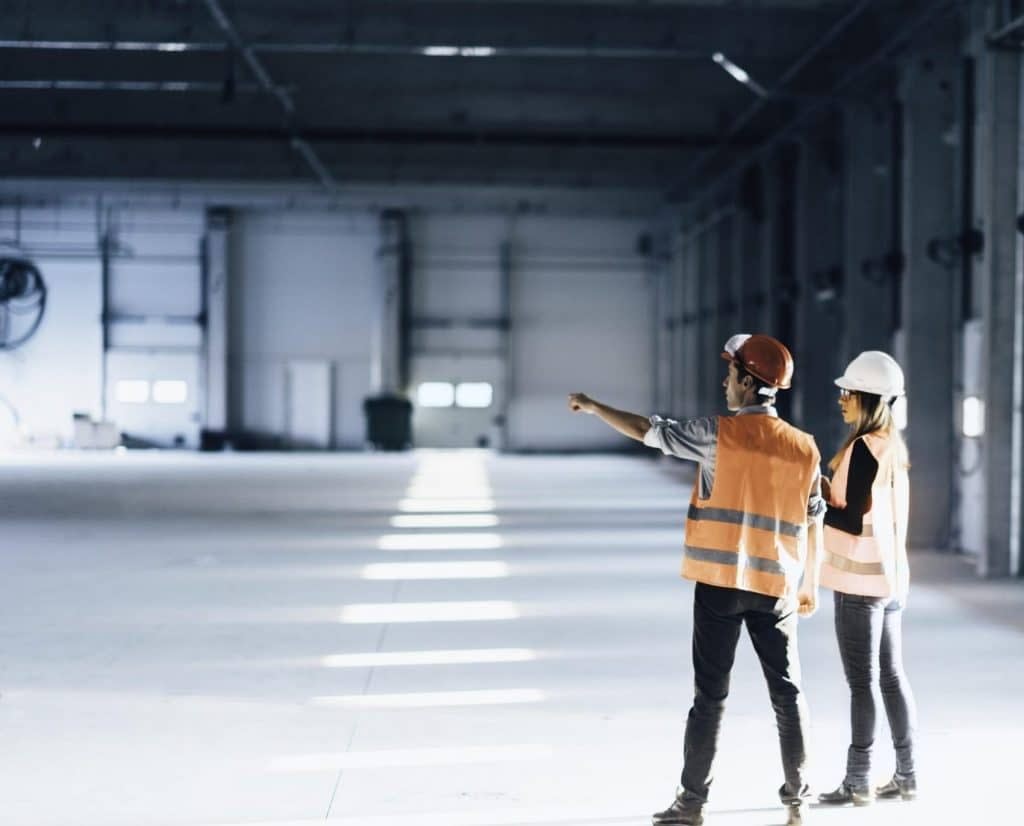
"The Future Of Workplace Safety: Consolidating Ground-Based Expertise With Global Tech Solutions
The safety field is at an intersection point. Since the beginning of time, progress included better engineering controls more extensive training, as well as more stringent enforcement. These techniques are still necessary, but they have reached the point of diminishing returns for many industries. The next breakthrough will not be a result of a single breakthrough, but rather from the convergence of two capabilities which have traditionally been developed separately with the deep understanding of safety experts that are familiar with specific workplaces and the analytical capability of technologies that process huge amounts and volumes of data as well as identify patterns that aren't visible to any one person. The goal of this merger is not replacing humans with algorithms. It is about augmenting the human judgement with machine intelligence, so that the safety worker on the ground is more effective, more precise, and more powerful and effective than it has ever been. Workplace security is to those who are able to integrate these two worlds seamlessly.
1. Technology and the Limits Purely Technological Approaches
The technology industry regularly offered that software alone could solve the problem of workplace safety. Sensors could detect dangers while algorithms would forecast incidents Artificial Intelligence would advise workers on what to be doing. These promises have consistently failed since safety is a fundamentally human problem. It's about human behavior, human judgement, human interactions and the human consequences. Technology can provide information and assist but it will never replace the specialized knowledge that an skilled safety professional brings to an increasingly complex workplace. The future of safety is in the integration rather than replacement.
2. What are the limits of Purely Human Approaches
In contrast, purely human methods have reached their limit. Even the most skilled security personnel can only take in too much, keep track of the details, and connect multiple dots. Human judgment is susceptible to fatigue, bias and limits of one's perspective. No single person can hold in their minds the patterns that emerge across dozens of sites or the most important indicators that have preceded incidents elsewhere, or the regulatory changes impacting areas they do follow. Technology extends human capabilities to the natural limits of human capability, offering information, pattern recognition and global visibility that can enhance rather than substitute professional judgment.
3. Predictive Analytics Helps You Decide Where to Go
One of the most powerful applications of the merged capabilities is predictive analytics that tells on-the-ground experts where to focus their efforts. The software analyses past incident data, near miss reports, audit findings as well as operational metrics to highlight areas, activities, and situations that are associated with increased risk. The safety professional will then look into these scenarios, applying the human sense to discern what the numbers mean within their context. Are the risk predictions real? What are the driving factors behind these risks? What kind of interventions are appropriate in light of local constraints as well as the cultural context? Technology makes points; the individual decides.
4. Sensors and wearables generate continuous Data Streams
The emergence of wearable devices and environmental sensors generates continuous streams of important safety-related data that nobody else could gather. Heart rate variability indicating worker fatigue. Air quality measures identifying hazardous exposures. Location tracking allows for the identification of unauthorised access to potentially hazardous areas. Motion sensors detecting slips or falls. World-wide platforms group this information across locations and regions and find patterns that need special attention from humans. On-the-ground experts investigate and validate sensor readings, understanding context, and determining the most appropriate response. The sensors supply the information and the human beings provide the context.
5. Global Platforms Facilitate Local Benchmarking
Safety professionals have often wondered how their performance compared to other professionals, but relevant benchmarks were not readily available. Global platforms for technology change this by aggregating anonymised data across different industries and regions. An administrator of safety in Malaysia will now be able to assess how their incident numbers auditor findings, incident rates, and leading indicators compare to similar facilities in their area and globally. This information helps in establishing priorities as well as substantiates request for resources. If local experts can demonstrate how their performances are in comparison to other regional experts, they get an advantage for investing. When they are leading their teams, they gain credibility and recognition.
6. Digital Twins Allow Remote Expert Consultation
Digital twin technology, which is the creation of virtual replicas for physical workplaces and updating them in real time - allows a whole new method of consultation with an expert. When an on-site safety manager confronts a complicated issue it is possible to connect remotely to global experts and examine the digital twin, review relevant information and provide help without having to travel. This makes it easier to access expert knowledge, which allows facilities in remote areas or developing economies to gain access to world-class information that otherwise be out of reach or impossible to access.
7. Machine Learning Identifies Leading Indicators
Traditional safety metrics are almost 100% lagging. They are merely telling you what has already happened. Machine learning implemented to integrate datasets is increasingly capable of identifying the leading indicators that predict future incidents. Patterns of reporting on near misses change. Shifts in the types of observations recorded during safety walks. A variation in time between hazard identification and correcting. These indicators that are identified by algorithms, are central points for local experts who are able to determine what is leading to the changes and act prior to the incident taking place.
8. Natural Text Processing Extractions Information from unstructured data
Most of the important safety-related information is unstructured, like investigative reports, safety meeting minutes, interview notes, emails and discussions. Natural language processing capabilities on integrated platforms will be able to analyse this information at a larger scale to identify thematic patterns, sentiment shifts, and new concerns that a human reader cannot aggregate. When the software notices that individuals across several sites are expressing similar frustrations about the process It alerts regional and international experts who will determine whether the method itself needs revision, instead of only local enforcement.
9. Training is personalised and flexible
The merger of on-the-ground expertise together with global technology provides training that is tailored to each user needs. The platform tracks each worker's position, experience, incidents past, as well as training completion. If patterns reveal specific knowledge absences in workers with certain roles, who are regularly have been involved in specific types of incidents -- the system recommends targeted courses of action. Local experts review the recommendations, altering them according to context, and monitor the implementation. The training is continuous and customized instead of regular and generic in that it addresses the real needs of learners rather than pre-conceived needs.
10. The Safety Professional's job description enhances
Perhaps the most important outcome of this merger is the increase to the level of the safety officer's position. Eliminated from data collection and the generation of reports that software can handle better, local experts are able to focus their attention on more profitable activities: building relationships with workers, understanding the operational reality creating effective interventions and influencing the culture of an organisation. Their insight is more valuable since it is based on the data they couldn't have collected on their own. Their recommendations are more trusted because they're based on evidence that goes far beyond personal experiences. The workplace safety professional of the future is not in danger by the advancement of technology but empowered by it--more knowledgeable, more influential, and more effective than ever before. Read the top international health and safety for blog tips including health and safety specialist, hazards at work, smart safety, health at work, safety consultant, health & safety website, occupational safety, risk assessment template, safety day, workplace safety courses and more.
